Website Accessibility: A Step Towards an Inclusive Internet
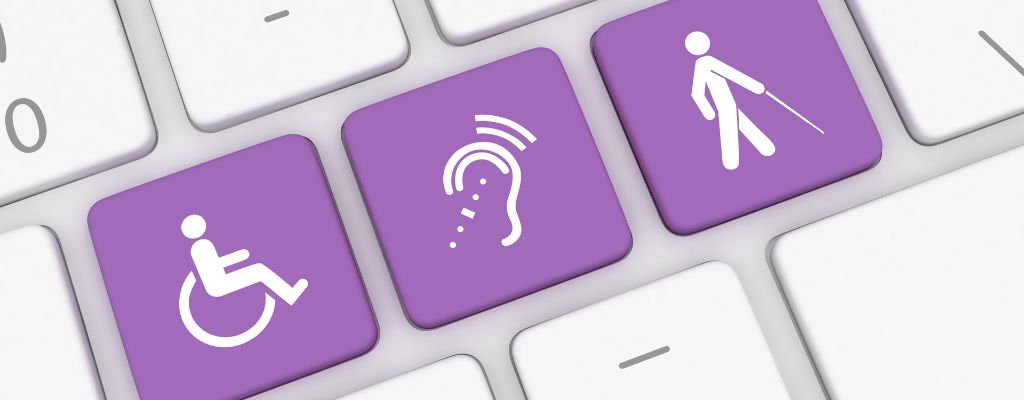
As technology has rapidly evolved, society has become more reliant on the internet than ever. From ordering groceries to accessing healthcare and financial services, nearly every aspect of daily life can now be managed online. However, many websites on the internet lack accessibility, posing difficulties for users with disabilities, including those with visual, auditory, cognitive, and mobility impairments. In fact, only about 3% of websites meet full accessibility standards.
Why Should Your Website Be Accessible?
Having an accessible website is a fundamental step toward building a truly inclusive brand. Contributing to an inclusive internet demonstrates social responsibility and a genuine commitment to seeing and respecting people for who they are and how they show up. In an increasingly digital world, this is essential for reaching broader audiences and fostering trust with diverse communities.
But digital inclusion isn’t only about doing what’s right, it’s about doing what works. Not only does an inaccessible website prohibit equal access for people with disabilities, but it also blocks potential conversions from this community. Over 1 billion people worldwide have a disability, and this population holds over $1.2 trillion in annual disposable income. Factor in their family and friends, and this number exponentially increases to over $8 trillion. Simply by committing to website accessibility, brands are opening their doors to over 15% of the world’s population.
Title II and III of the ADA prohibit discrimination against people with disabilities by state and local governments and businesses open to the public. Committing to website accessibility is an ethical decision that also mitigates potential legal risks. Additionally, businesses that commit to website accessibility can be eligible for up to $5,000 in tax credits.
How to Make Your Website Accessible
Disabilities can include impairments to vision, hearing, mobility, cognitive processes, and other functions. To ensure accessibility, here is a checklist of some things you can do to improve your website:
- Use highly contrasting colors
- Add alternative text to images
- Add closed captions and transcripts to videos
- Allow for keyboard-only navigation
- Allow for content size to be adjusted
- Use simple and concise language
- Ensure compatibility with screen reader software
For some individuals with visual impairments, screen reader software is a must. This software reads digital text aloud. By including alternative text on website images, you are providing an accessible alternative for those who rely on screen reader technology. Alternative text and video transcripts also contribute to website optimization, further increasing SEO and reach. By committing to website accessibility, brands not only promote inclusivity but also improve their organic reach through better website practices.
Take the Step Towards Website Accessibility
Crayons & Marketers is committed to inclusive marketing. We’ve partnered with accessiBe, the #1 web accessibility solution for Americans with Disabilities Act (ADA) and Web Content Accessibility Guidelines (WCAG) compliance, to help our clients make their websites accessible to all.